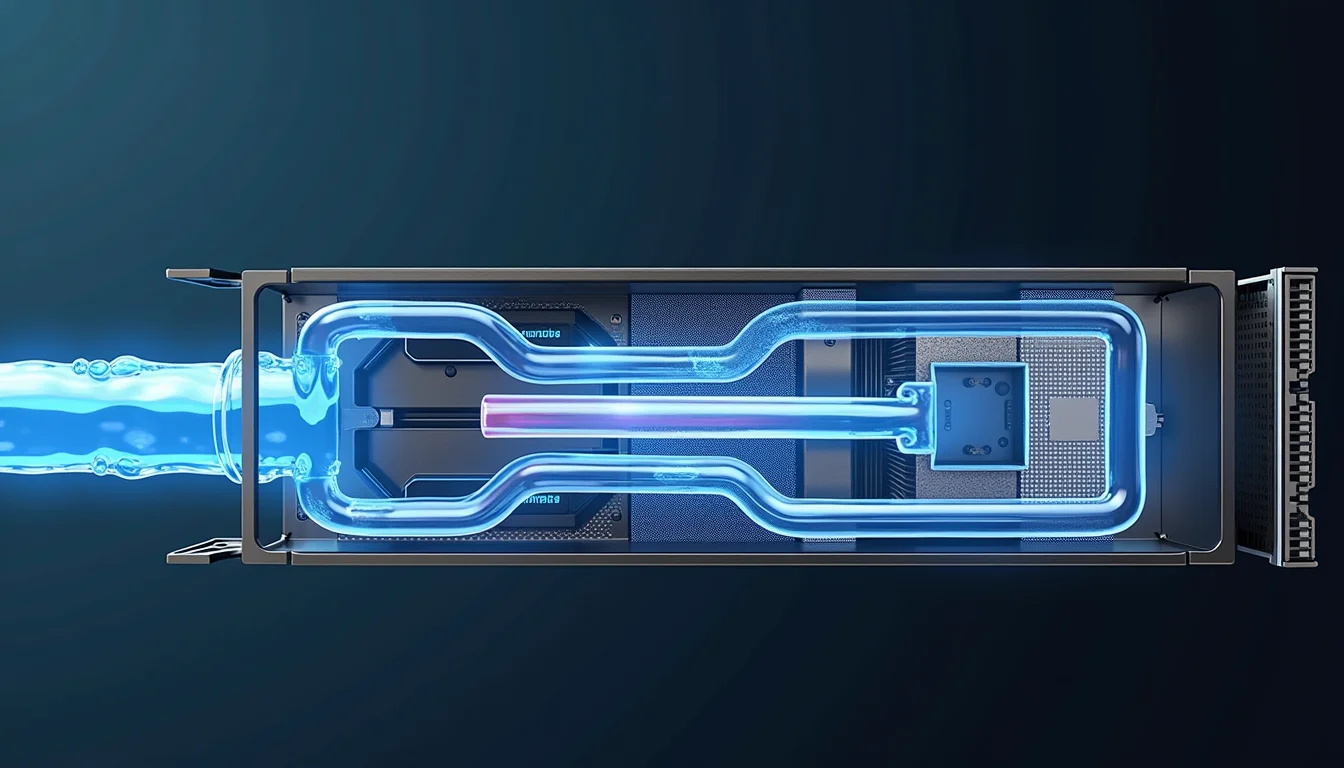
As the demands of AI and high-performance computing (HPC) continue to escalate, traditional air cooling methods are reaching their physical and economic limits. The sheer density and heat output of modern server racks are creating a critical bottleneck for data center operators. The solution is rapidly moving underground—literally—with the adoption of advanced cooling techniques, most notably Direct Liquid Cooling (DLC) and immersion cooling.
The Cooling Crisis: Why Air Isn’t Enough
For decades, data centers relied on Computer Room Air Conditioning (CRAC) units, circulating massive volumes of air to dissipate heat. While effective for lower-density workloads, this method struggles when server components—especially high-powered GPUs and specialized AI accelerators—generate concentrated heat loads. This leads to several inefficiencies:
- Thermal Hotspots: Air cooling struggles to uniformly remove heat from dense, localized sources.
- Energy Waste: Moving and conditioning vast amounts of air consumes significant energy, contributing to a high Power Usage Effectiveness (PUE) score.
- Physical Limits: As chip power increases (measured in watts per square inch), the thermal density exceeds the capacity of air to manage it effectively.
How Direct Liquid Cooling Works
DLC involves circulating liquid coolant (often a specialized dielectric fluid or water/glycol mix) directly into or around the hottest components of the server—the CPU, GPU, and memory modules. Instead of cooling the room, you are cooling the source.
This approach offers dramatic improvements in efficiency. By transferring heat directly from the source to the coolant, the system can achieve much higher heat removal capacities with less energy expenditure. This fundamentally changes the data center’s operational profile, allowing for unprecedented compute density.
The shift to liquid cooling is not merely an upgrade; it is a foundational architectural pivot. It allows data centers to move from being constrained by thermal limits to being limited only by compute power.
Comparing DLC to Traditional Methods
The benefits of DLC are quantifiable, primarily impacting the Total Cost of Ownership (TCO) and the PUE score. While the initial CapEx investment for liquid cooling infrastructure can be higher, the operational expenditure (OpEx) savings—stemming from reduced cooling energy—are substantial and rapidly offset the initial cost.
Key Advantages of DLC:
- Superior Heat Transfer: Liquids are vastly more efficient at transferring heat than air, allowing for higher component operating temperatures and better performance stability.
- Higher Density Support: DLC enables the deployment of ultra-high-density racks (e.g., those housing multiple AI accelerators) that would be impossible or prohibitively expensive to cool with air.
- Reduced Footprint: By optimizing cooling, the overall physical footprint and associated infrastructure can be streamlined.
The Future of Data Center Infrastructure
The industry trend is clear: liquid cooling is becoming the standard for modern, high-performance computing environments. From hyperscale cloud providers to specialized AI research facilities, the move away from air-centric cooling is accelerating. This architectural evolution is critical for supporting the next generation of compute-intensive applications, including advanced AI models and quantum computing simulations.
For organizations planning future data center expansions, evaluating the integration of DLC into the initial design phase is no longer optional—it is a strategic necessity for maintaining competitive efficiency and scalability.
For more detailed technical specifications and industry adoption rates, consult leading industry reports on sustainable data center design. Furthermore, understanding the economic models behind this shift requires reviewing comprehensive analyses from major cloud infrastructure providers.