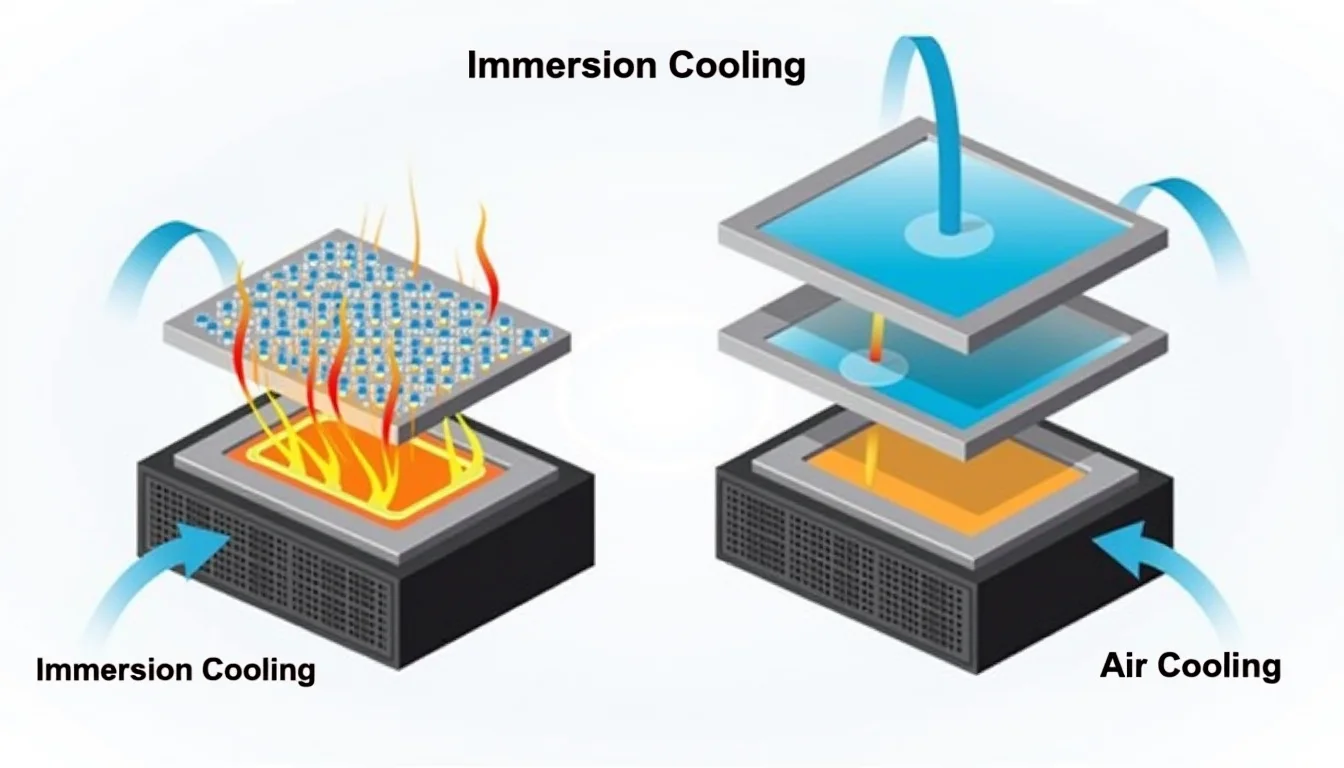
The exponential growth of AI and high-density computing has created a monumental challenge for data center operators: managing heat while controlling spiraling operational costs. With power prices skyrocketing—as evidenced by the recent 76% year-over-year jump in PJM power prices—traditional air cooling methods are reaching their operational limit. For modern AI racks, which draw immense power, relying on outdated cooling infrastructure is no longer a viable business strategy. The industry is undergoing a critical pivot toward advanced liquid cooling, with **immersion cooling** emerging as the definitive solution for sustainable, high-density computing.
The Economic Imperative: Power Costs and Heat Density
The core problem is simple: AI hardware generates massive amounts of heat. When this heat meets the backdrop of volatile and escalating electricity costs, the Total Cost of Ownership (TCO) of traditional air-cooled facilities becomes unsustainable. Air cooling, while familiar, struggles to efficiently dissipate the concentrated heat of modern GPUs and specialized AI accelerators. This inefficiency translates directly into wasted energy and massive operational expenditures (OpEx).
The economic data is stark. The jump to $136.53/MWh in certain regions highlights that energy efficiency is no longer a technical luxury; it is a **critical financial mandate**. Infrastructure leaders must now prioritize solutions that manage heat at the source, maximizing Power Usage Effectiveness (PUE) and minimizing reliance on expensive grid power.
How Immersion Cooling Changes the Game
Immersion cooling involves submerging server components directly into a non-conductive, specialized dielectric fluid. This method fundamentally changes the thermodynamics of the data center. Instead of trying to move heat away from the components using massive volumes of air, the fluid absorbs the heat directly and efficiently, allowing for unprecedented power densities.
Key Advantages Over Air Cooling:
- Superior Heat Transfer: Liquids transfer heat thousands of times more efficiently than air, making it ideal for the extreme thermal loads of AI racks.
- Higher Density Potential: Immersion cooling supports significantly higher compute density per rack, maximizing ROI from expensive real estate.
- Energy Efficiency (PUE): By managing heat at the source, the need for massive, energy-intensive chillers and CRAC units is drastically reduced, leading to superior PUE scores.
The shift from air to liquid cooling represents a fundamental architectural upgrade. It moves the focus from simply ‘keeping things cool’ to ‘managing energy flow’—a crucial distinction for the next generation of AI infrastructure.
Operational Viability and ROI
While the initial Capital Expenditure (CapEx) for implementing an immersion cooling facility can be higher than retrofitting an air-cooled setup, the long-term Return on Investment (ROI) is overwhelmingly favorable. The ability to operate at higher power densities and drastically lower OpEx due to reduced energy consumption quickly offsets the initial investment. For CFOs and CTOs, the TCO argument is undeniable.
Furthermore, the advanced nature of these systems allows data centers to future-proof their infrastructure against increasingly volatile power markets, ensuring operational viability even when faced with extreme power price spikes.
The Future of AI Infrastructure
The industry consensus is clear: liquid cooling is not an option, but a necessity. As AI models become larger and more power-hungry, the infrastructure must evolve accordingly. Organizations must begin planning for liquid-based architectures now to maintain a competitive edge and ensure sustainable operations in the face of escalating energy costs.
For deeper dives into the technical standards and implementation strategies, consult industry leaders like Data Center Cooling Insights and review the latest standards from Environmental Protection Agencies regarding industrial energy use.