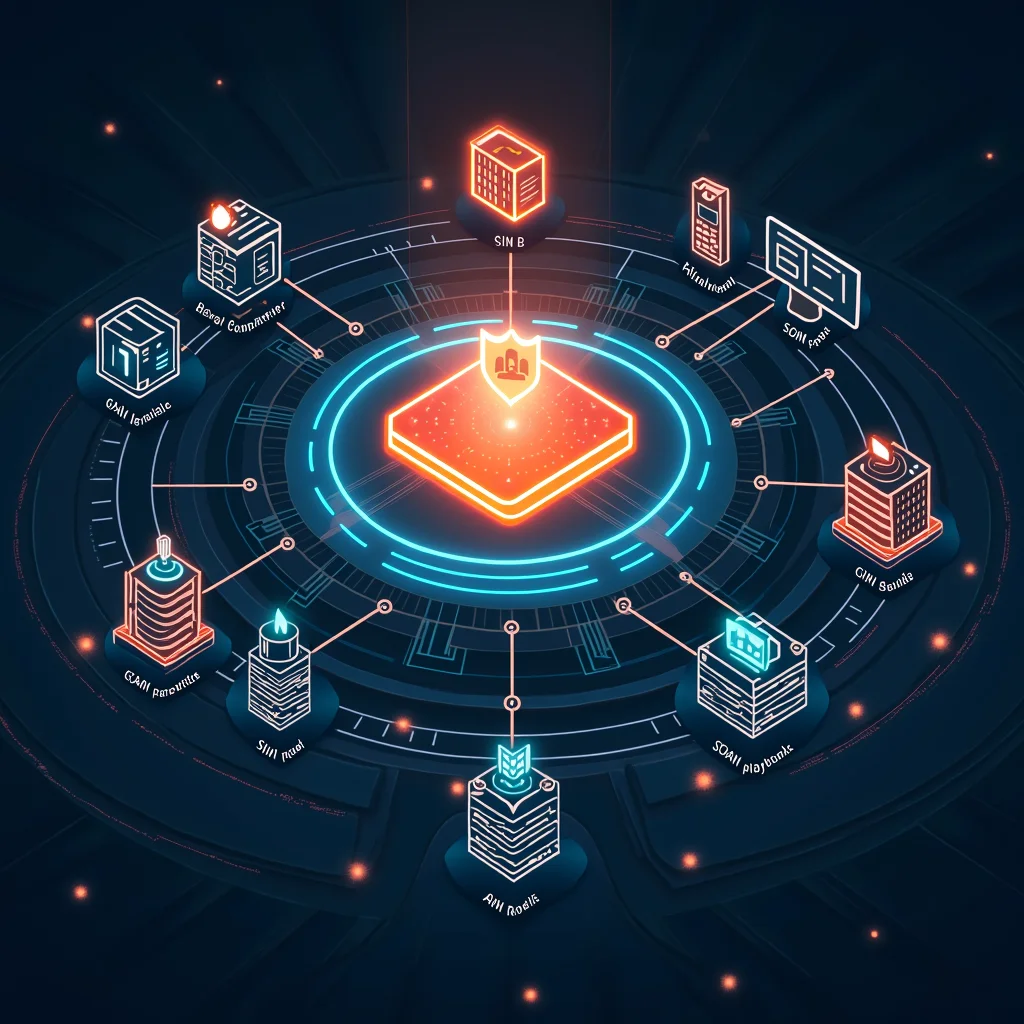
The cybersecurity landscape is undergoing a seismic shift. Gone are the days when a single, monolithic AI tool could solve all threat detection problems. The industry is rapidly moving toward highly orchestrated, **multi-agent AI systems**—complex ecosystems where dozens, even hundreds, of specialized AI agents collaborate to achieve superhuman levels of threat intelligence and vulnerability discovery. This architectural shift, exemplified by systems like Microsoft’s MDASH, represents the next frontier in defensive security, but it introduces profound challenges for architects.
The Shift from Single Tools to Orchestrated Ecosystems
The core limitation of previous security tooling was its siloed nature. A single AI model might excel at log analysis, while another handled network traffic, but coordinating them was manual, slow, and prone to gaps. Modern systems are changing this paradigm. Consider the capability demonstrated by MDASH, which orchestrates over 100 specialized AI agents to perform deep vulnerability scanning, successfully identifying previously unknown flaws in systems like Windows. This is not merely advanced scanning; it is **orchestrated intelligence**.
The challenge for security architects is no longer acquiring the best AI model; it is building the robust **integration layer** that allows these diverse, specialized agents to communicate, share state, and act upon findings in a coordinated manner. This layer must bridge the gap between bleeding-edge AI capabilities and decades-old, mission-critical security infrastructure like SIEM and SOAR platforms.
Architecting the Integration Layer: The Middleware Imperative
The most critical component in this new architecture is the middleware—the unified orchestration layer. This layer must perform several complex functions:
- Standardized Communication: It must enforce standardized APIs and protocols so that agents built on different foundational models (e.g., specialized Mistral fine-tunes for banking compliance) can talk to each other seamlessly.
- State Management: It needs to track the progress and findings of hundreds of concurrent agents, ensuring that no vulnerability or threat signal is missed or misinterpreted.
- Action Execution: It must interpret the complex, multi-step output of the AI agents and translate those findings into actionable playbooks that can be executed by traditional SOAR tools.
The consensus among leading security architects is clear: the next wave of tooling will not be the AI model itself, but the **governance and orchestration layer** that standardizes inputs, manages agent state, and ensures auditable, compliant outputs across heterogeneous environments.
Addressing Integration Debt and Governance
The immediate hurdle is what the community calls the ‘integration debt’ problem. How do we connect a cutting-edge, proprietary AI agent that speaks ‘AI-speak’ to a legacy SIEM that speaks ‘Syslog’? The answer lies in adopting a modular, API-first approach to security architecture.
Furthermore, as models become highly specialized—such as those fine-tuned for European banking compliance—**governance** becomes paramount. The orchestration layer must not only coordinate agents but also provide a verifiable audit trail, ensuring that every action taken by the AI is compliant, traceable, and explainable. This is crucial for high-stakes domains where regulatory adherence is non-negotiable.
Key Architectural Takeaways for Security Teams
To successfully navigate this shift, security teams must focus their efforts on these architectural pillars:
- API Standardization: Prioritize developing or adopting standardized APIs for agent communication and data exchange.
- Unified Data Ingestion: Build a middleware capable of ingesting, normalizing, and correlating data from AI outputs, SIEM logs, and SOAR playbooks simultaneously.
- Workflow Orchestration: Implement sophisticated workflow engines that manage complex, multi-step attack simulations and vulnerability discovery processes across multiple agents.
By focusing on the **orchestration layer** rather than just the individual AI models, organizations can build resilient, future-proof cybersecurity defenses capable of handling the complexity of modern, multi-vector threats.