Transforming Patient Care: The Future of AI in Healthcare
The healthcare industry stands on the precipice of a revolution, driven by the exponential growth of Artificial Intelligence (AI). Once a concept confined to science fiction, AI is rapidly becoming the most powerful tool for enhancing diagnostics, accelerating drug discovery, and personalizing treatment plans. This transformation promises an era of unprecedented efficiency and accuracy in patient care.
Early Disease Detection and Diagnostics
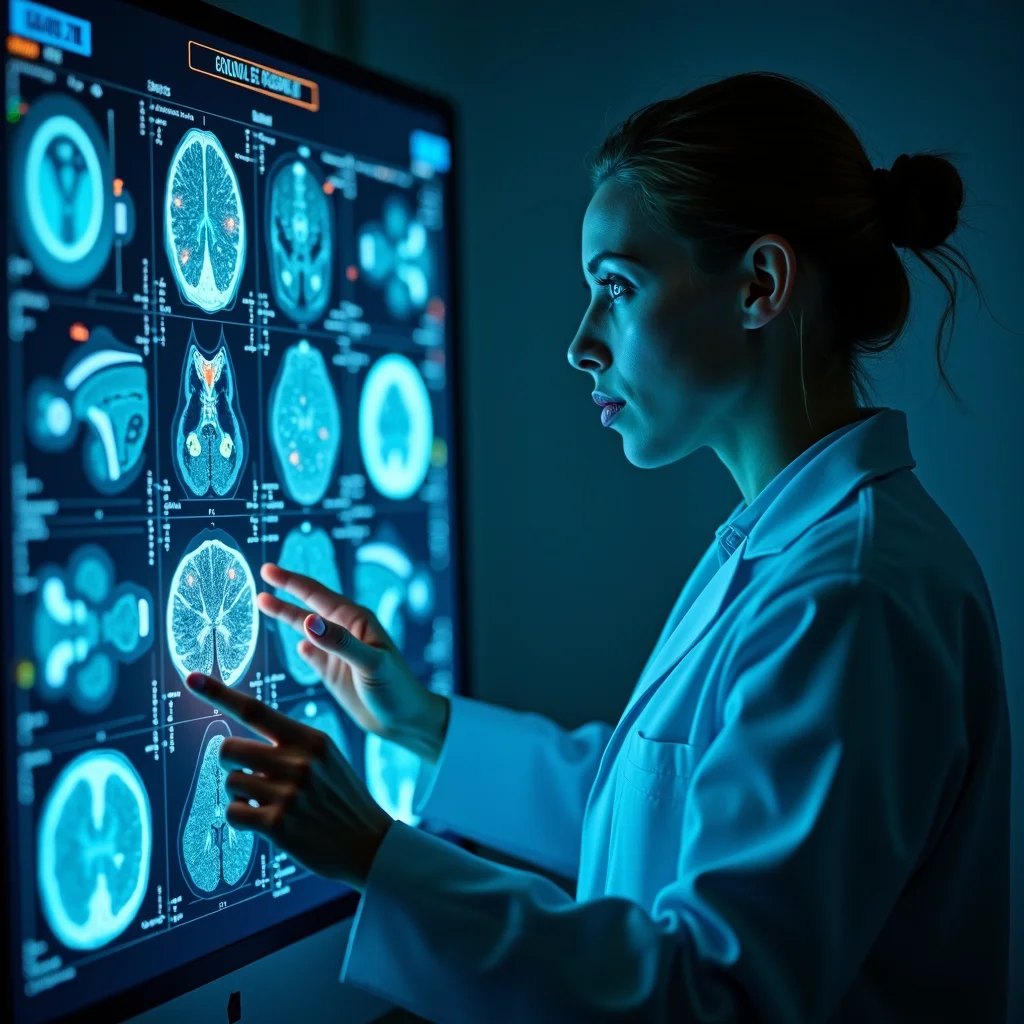
One of the most immediate and impactful applications of AI is in diagnostics. Machine learning models are proving exceptionally adept at analyzing complex medical data—including X-rays, MRIs, and genomic sequences—often surpassing human capabilities in speed and consistency. For instance, AI algorithms can detect subtle patterns indicative of diseases like cancer or diabetic retinopathy years before human observation might catch them. This early detection capability is crucial for improving patient outcomes and making treatment significantly more manageable.
Revolutionizing Drug Discovery and Genomics
The traditional process of drug discovery is notoriously slow, expensive, and high-risk. AI is fundamentally changing this paradigm. By analyzing vast datasets of molecular structures and biological interactions, AI can predict which compounds are most likely to be effective against specific diseases. This drastically reduces the time and cost associated with identifying viable drug candidates. Furthermore, in the realm of **genomics**, AI allows researchers to map complex genetic interactions, paving the way for truly **personalized medicine**.
“AI is not here to replace doctors, but to augment their capabilities. It is a powerful co-pilot that handles the data complexity, allowing human expertise to focus on empathy, critical thinking, and complex patient interaction.”
— Dr. Evelyn Reed, Expert in Health Tech
Personalized Treatment and Robotic Surgery
The concept of ‘one-size-fits-all’ medicine is rapidly becoming obsolete. AI enables the creation of highly personalized treatment pathways. By integrating a patient’s genetic profile, lifestyle data, and real-time physiological metrics, AI can recommend the optimal drug dosage or therapeutic intervention. Furthermore, **robotic surgery**, guided by sophisticated AI vision systems, is increasing precision, minimizing invasiveness, and leading to faster patient recovery times. These advancements represent a major leap in surgical care.
Ethical and Regulatory Considerations
While the potential benefits are immense, the integration of AI into healthcare is not without significant challenges. The paramount concerns revolve around **data privacy**, algorithmic bias, and the need for robust **regulatory frameworks**. Ensuring that patient data remains secure and that AI models are trained on diverse, unbiased datasets is critical for maintaining trust and ensuring equitable care for all populations. The industry must prioritize ethical guidelines alongside technological advancement.
To learn more about the regulatory landscape, consult resources like the FDA’s guidance on digital health. For deeper insights into the ethical implications of AI in medicine, organizations like the WHO provide essential guidelines.
The future of healthcare is undeniably intertwined with AI. By addressing the ethical challenges proactively and embracing the technological advancements responsibly, we can usher in a new era of preventative, precise, and highly effective patient care.